Title: PET Detection of CCR2 in Human Atherosclerosis
- Principal Investigator: Dr. Mohamed Zayed
- Study Coordinator: Kelley Chadwick-Mansker
This study utilizes the use of novel radio-pharmaceutical 64CUDOTA-ECL1i to evaluate arterial Atherosclrosis.
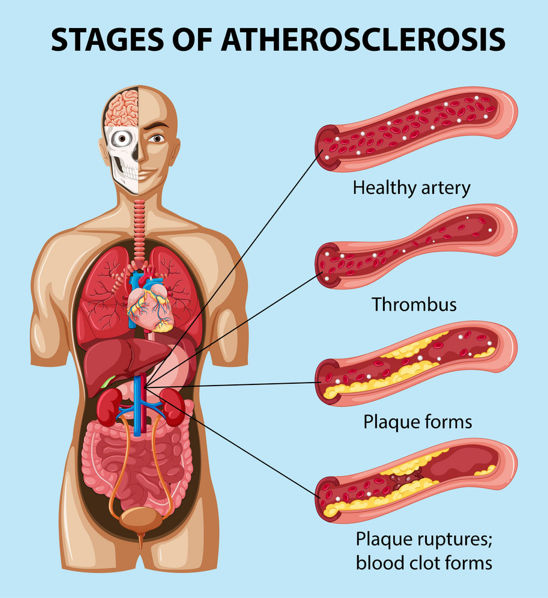
A central modern tenet of atherosclerosis is that inflammation is a key driver of the process, and likely provides at least a partial explanation for the excess CVD risk observed even after optimal treatment of traditional risk factors. There is a critical unmet need for imaging tools that accurately risk stratify atherosclerotic patients based on their inflammatory phenotype and identify those where a given therapy is indicated and then monitor its effect. The monocyte chemoattractant protein-1 / C-C chemokine receptor type 2 (MCP-1/CCR2) axis is of particular interest due to its central role in recruitment of pro-inflammatory monocytes which through their conversion of pro-inflammatory
macrophages are crucial for early atherosclerotic lesion formation and its progression. We have developed a copper-64 radiolabeled extracellular loop 1 inverso (ECL1i) peptide PET radiotracer that targets CCR2 ([64Cu]DOTA-ECL1i). We have shown this radiotracer provides sensitive and specific detection of CCR2 receptor expression in a human monocytic cell line and ex-vivo human peripheral arterial atherosclerotic plaque and tracks disease progression and treatment response in pre-clinical atherosclerotic models. Moreover, we have initial human subject PET data to suggest [64Cu]DOTAECL1i noninvasively detects atherosclerotic lesions.
This is a joint study with the St. Louis VA and Washington University.
This study is administered by VREF and funded by the NIH (National Institute of Health).
Find Out More
This study is currently enrolling participants. To learn more about CCR2 and how you can join contact our research office at (314) 289-7690.
If you are a veteran receiving care through the VA St. Louis Health Care System and believe you may be eligible for this study, please speak with your Physician. For general information about our research, please visit our main Clinical Trials page or contact us directly.